Reading children’s signals earlier
Nosis is a research lab we run with Dr. Valentina Fioretti, a pediatric resident, working where machine learning meets pediatrics and neurology.
The labWhat we do
Children’s brains leave signals long before anyone can name what they mean. Nosis builds models that read those signals, and, just as importantly, establishes how far they can be trusted.
FlatNine brings the engineering: data pipelines, training infrastructure, evaluation that survives contact with a statistician. Dr. Fioretti brings the clinical question, the annotation standard, and the judgement about what a result means at the bedside. Neither half works alone: a model that scores well on a benchmark nobody asked for is not research, and a clinical intuition with no way to measure it is not either.
We work on decision support: tools that draft, flag or describe, for a clinician to validate. Nothing we build concludes anything on its own, and nothing we build is deployed to patients.
FoundersWho runs it
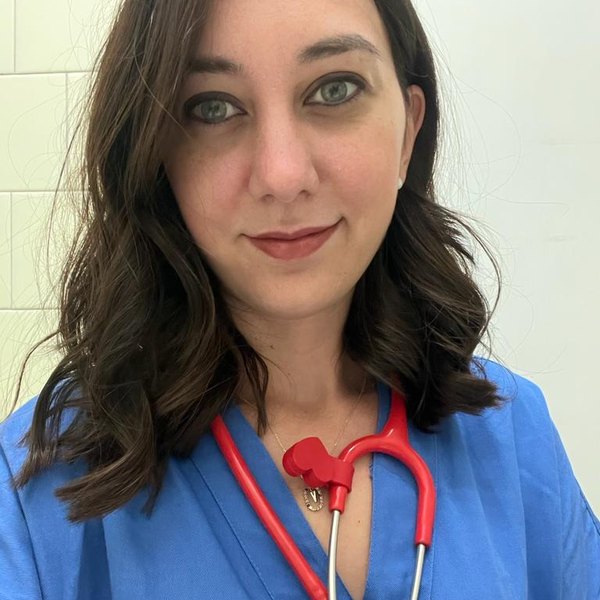
Sets the question, the annotation standard, and the judgement about what a result means at the bedside. Decides when a number is good enough to matter and when it is not.

Builds the pipelines, the training infrastructure and the evaluation, including the parts that make a promising result fall apart under external validation.
MethodHow we work
The question is whatever a clinician actually has to decide: is this recording worth a closer look, what does this pattern look like, is this the finding a tired reader would miss. Not whatever the dataset makes easy to measure.
A number from the corpus you trained on describes the corpus. We test on data from a different hospital, country and machine, and we quote that number first, even when it is much worse.
Where a model is worse than a human, we say by how much. Where a result rests on four patients, we say four. The negative results are the ones that tell you what to build next.
Interpretable features and template descriptions beat an opaque model that cannot explain a flag. A reader has to be able to see why the tool said what it said.
Active researchWhat’s running now
Interictal discharge detection on routine scalp EEG
Reading a routine EEG for the abnormality between seizures, and saying out loud where the model is not good enough yet.
Motor trajectories in early-treated pediatric SMA
What happens to children caught by newborn screening and treated in their first weeks, and which factor actually separates their outcomes.
ContactWorking with us
We’re interested in clinical collaborators with annotated data, and in questions where the answer would change what happens in a reading room.
Get in touch